
January 6, 2026 · Richmond
Pecan Grove and a dead sprinkler zone — what Richmond yards do
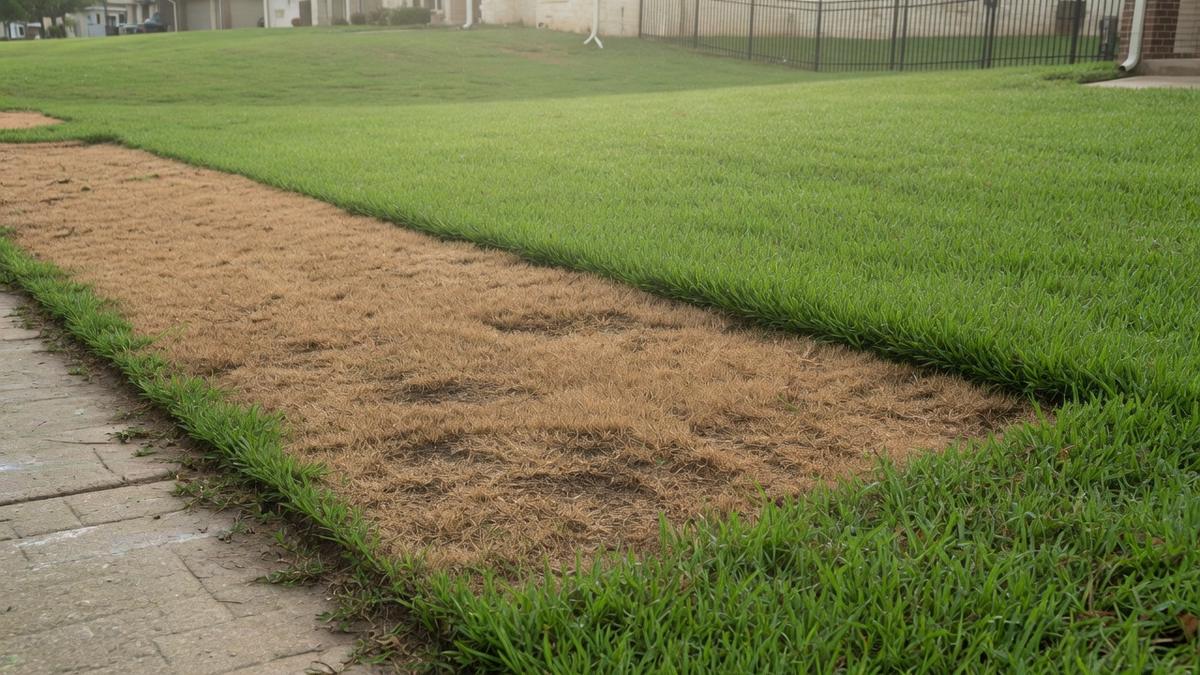
Sprinkler Zone Troubleshooting in Richmond, Texas starts with one station dead while the others run. One dry zone usually has a different cause than an entire system that will not run. Around Aliana and Harvest Green, the houses are fast-growing HOA sections plus pecan-shaded older lots with long lateral runs.
A typical call sounds like this. In Harvest Green, in July, when the temptation is to add minutes, someone notices a zone that shuts off early on a shaded back yard. The rest of the yard, toward Pecan Grove, still looks acceptable from the street, which is why the problem gets described as small. It is small only if the station, the valve, and the heads agree. We ask whether the wet or dry area changes while that station runs, and whether it continues after the clock moves on. Those two answers separate a nozzle, a valve, and a leak before we price a part. The soil under that lawn is Brazos bottom clay that stays plastic after rain and hard after a dry spell. The turf is mostly St. Augustine, sometimes Bermuda on the newer open sections. A schedule copied from a different turf or a sunnier neighborhood will not survive contact with this yard. Water service here is Fort Bend municipal utility districts and, in the older core, city water. Any day-of-week rule has to come from the current notice for this address, not from a metro-wide chart.
What the system is actually doing
One dead zone is a narrower problem than a dead system, and it is still not a diagnosis. The station can fail at the controller terminal, in the wire, at the solenoid, inside the valve, or in a pipe that is broken so badly the heads never see pressure. The order of the tests matters. We start the station manually, confirm the clock is calling for it, and only then go to the box.
A zone that starts and then quits may be a flow issue, a valve that cannot stay open, or a program with a short runtime you did not know was there. A zone that never starts, while its neighbors run, is more often wire, solenoid, or a valve that is mechanically stuck. Weak heads on that station alone push the search toward a leak or an obstruction downstream of a valve that is at least partly open.
Comparing two stations is the whole method. The working station proves supply, the pump if there is one, and the controller’s basic health. The dead station is then a difference, not a mystery. We do not replace the controller to fix one zone until those differences are exhausted.
Field wiring in a flooded box is not a casual splice. If the connectors are underwater we dry the repair, use connectors made for wet locations, and leave the lid on so the next storm does not refill the box with silt.
The ground under Richmond
Richmond is two jobs. Pecan Grove is mature trees, longer laterals, and fittings with age. Aliana, Harvest Green, Long Meadow Farms, and Veranda are newer sections where the heads should still be at grade and often are not, because the soil settled or the mower found them. Brazos-bottom clay stays soft after rain, which hides a leak inside a yard that is wet everywhere. We run the station anyway.
Landmarks we use to talk about the route include the Brazos River, the historic Richmond square, and the Pecan Grove canopy. ZIPs we see often are 77406, 77407, 77469, though the utility on the bill matters more than the ZIP. Service is Fort Bend municipal utility districts and, in the older core, city water. If a drought stage or a day-of-week rule is in effect, it is the one that provider published for this address. Our guide to checking watering restrictions is a method, not a live legal notice.
A pass through Richmond neighborhoods
These are the sections we mean when we say Richmond: Aliana, Harvest Green, Long Meadow Farms, Pecan Grove, Veranda. A visit for this problem does not look identical in each of them.
When only one station dies in Aliana, the working zones are the control experiment. Supply is present. The clock can run something. What remains is the terminal, the wire, the solenoid, the valve, or a lateral that is open so wide the heads never stand up. We go in that order. Replacing heads on a zone with no water is how parts get thrown away.
Harvest Green describes the dead area as ‘the side yard’ or ‘by the oak’ rather than a station number. We start the stations until that landmark moves or fails to. Then the number goes on the card in plain words. The next repair in Long Meadow Farms should not require another treasure hunt.
A zone in Pecan Grove that starts and quits may be a short runtime hiding in a second program, a valve that cannot stay open, or a leak dumping pressure. The display is checked for start times people forgot. If the program is honest and the heads still collapse, we are back to a mechanical fault or a break, not a software one.
Several zones out together in Veranda point at a shared wire or a master valve more than at five simultaneous diaphragm failures. Brazos bottom clay that stays plastic after rain and hard after a dry spell and wet boxes corrode splices. We open the first box on that path before we schedule five valve replacements. One dry connector redone properly is a better outcome than a new manifold.
Heads that twitch and quit in Long Meadow Farms are getting a taste of pressure and losing it. That is not a nozzle shopping problem. Something downstream of a partly open valve, or a break, is taking the flow. We compare with the station that still reaches full pop-up height. The difference in height is the clue.
How the diagnosis runs in Richmond
- Start the dead station manually.
- Compare it with a living station.
- Check voltage at the valve if the clock is sending a signal.
- Open the valve or find the break if there is no water.
- Label the station with a place name.
That sequence is the same standard we use on sprinkler zone troubleshooting across the metro. The local part is the yard: Richmond combines established areas with fast-growing communities and a wide range of lot sizes and irrigation layouts.
What we will not pretend
A photograph is not a diagnosis. A water bill is not a location. A smart controller is not a new pipe. Brown turf is not automatically a dry zone: chinch bugs, fungal disease, urine, and shade all imitate missed irrigation, and missed irrigation imitates them. We can test coverage. A turf diagnosis beyond coverage may belong to someone else. Read brown patch or a sprinkler problem and chinch bugs or a dry zone before you drown a lawn that was not thirsty. We also do not publish a flat price for a leak we have not found. Access, the fitting, and the surrounding pipe change the job.
Hiring is regulated in Texas. Ask who will do the work and check the license. Ours is listed as LI 6529. The short version of what that license is for lives in what a Texas licensed irrigator does. Backflow devices protect the drinking-water supply. We do not bypass them to make a zone run. If your provider wants a test, what happens during a backflow test explains the idea without pretending every city uses the same interval.
Questions we hear on this job
What does this look like in Richmond?
People describe one station dead while the others run or weak spray in a single section. On Brazos bottom clay that stays plastic after rain and hard after a dry spell, we confirm the symptom with the station running before we name a part. Construction activity, settling, bed changes, and long lateral lines can lead to leaks, low pressure, or heads that no longer sit at grade.
Will a longer watering schedule fix it?
Not if the pattern is uneven or water is escaping. Extra minutes amplify a leak or a bad nozzle. We repair the fault, then set the clock to the turf and to your utility’s current rules.
How do I shut it off if water will not stop?
If you can do it safely, close the irrigation isolation valve near the backflow device. Turning off the controller does not stop a valve that is stuck open. Then call 346-642-6161 and say which part of the yard is wet.
Where to go next
The money page for this work is sprinkler zone troubleshooting. If you are in Richmond, start with the Richmond service area and the local page for a dead sprinkler zone in Richmond. Nearby, we also cover The Woodlands and Rosenberg. Related repairs: low sprinkler pressure and an irrigation inspection. Keep reading: August clay cracks and the fitting that finally lets go, Builder irrigation after the warranty year, Common-wire problems on older Houston clocks. To book the visit, use the contact form or call 346-642-6161. The full library sits on the field notes index.
Houston Sprinkler Repair schedules this work by phone at 346-642-6161. Tell us the city, the symptom, and whether water is moving right now. If you want the broader map first, the service area index lists every city, and all repairs lists every service.